
Is Your Practice Prepared
for Clients in Crisis?
ACCESS OUR FREE RESOURCE
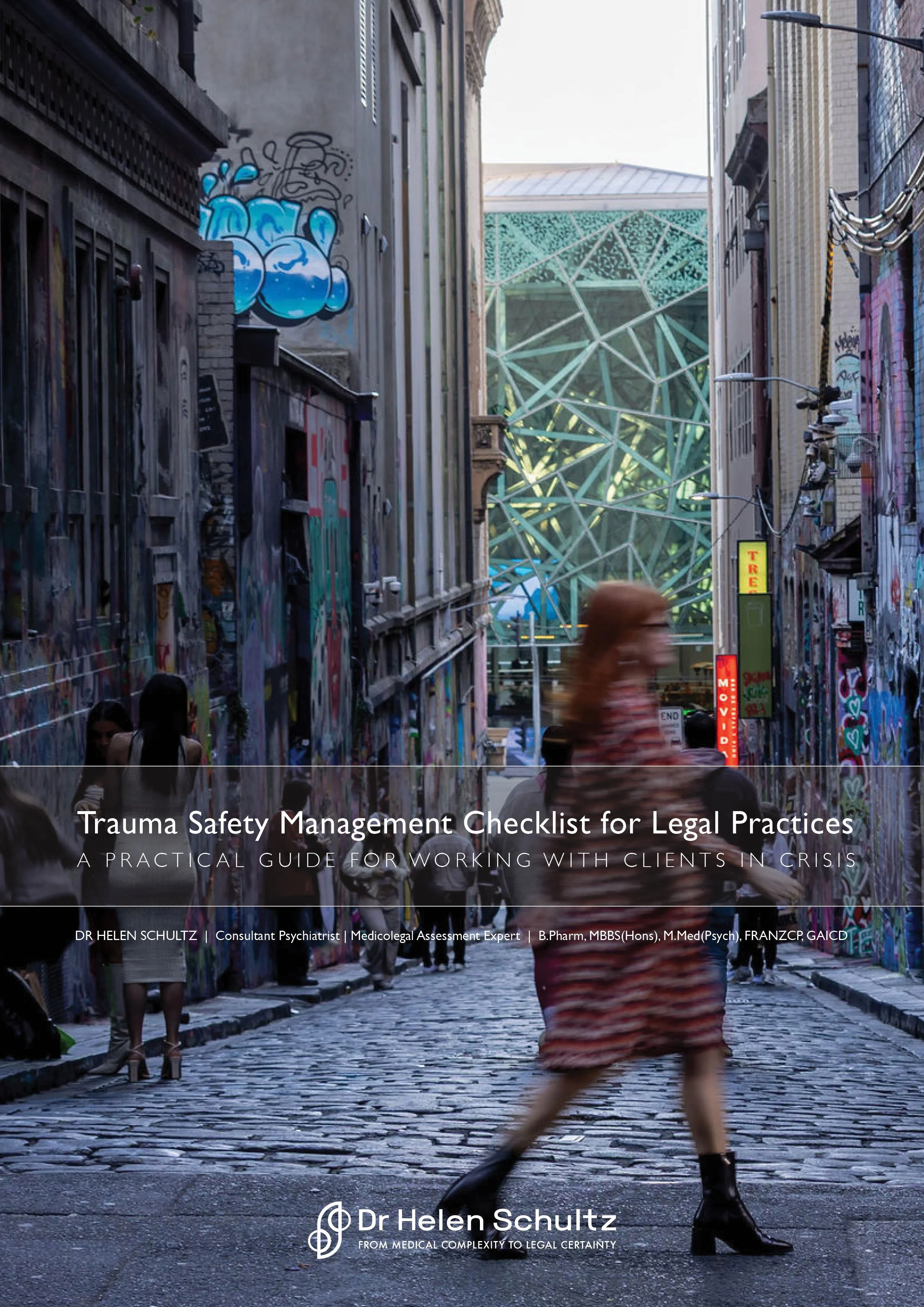
Download this practical checklist to assess your trauma-informed practices and keep vulnerable clients safe
Legal professionals handling historical abuse claims, personal injury matters, and workers' compensation cases regularly encounter clients experiencing significant psychological distress. Standard legal processes can inadvertently cause harm when trauma responses aren't recognised and managed appropriately.
This comprehensive checklist helps you assess your current practices across six critical areas and identify specific improvements that will make your practice safer for vulnerable clients whilst strengthening case outcomes.
>> GET THE FREE RESOURCE
Submit your email address and receive the resource direct to your inbox now.
What's inside the checklist
Office Environment Safety Assessment
Physical space modifications and scheduling protocols that reduce client distress without additional costs
Communication and Interaction Protocols
Practical techniques for initial contact, meetings, and managing trauma disclosure that improve information quality
Documentation and Information Management
Trauma-sensitive record-keeping approaches that provide better evidence for psychiatric assessments
Crisis Recognition and Response
Clear guidelines for identifying escalating distress and implementing appropriate interventions
Supporting Your Team
Staff training frameworks and vicarious trauma protocols that protect your whole practice
Why this matters for your practice
Trauma-informed approaches aren't about becoming mental health professionals. They're practical risk management strategies that prevent crises, reduce client disengagement, and improve the quality of information you gather for legal proceedings.
Legal teams using trauma-informed practices report better client engagement, more complete information disclosure, stronger professional relationships, and more effective expert witness briefing.